Bouquet: Rhys Langston, Asterisk, and Quadry
Bouquet is a round-up series of underground music deserving of your attention span.

Introducing Bouquet, a (somewhat) quick-hitting approach to giving out flowers. The series collects records from artists whose albums, through little fault of their own, in an unjust system have been offered meager critical attention. And yet, these are serious records that are pushing the art form of rap. In some instances I might have tried to land a feature profile around their work, but failed1. Bouquet will be part reconciliation, but mostly guided by deference. The following is a fragrant bouquet of underground hip-hop albums, hand-picked with love by yours truly.
The first collection of bouquets go out to Rhys Langston, Asterisk, and Quadry, all of which have released notable albums in 2025 that you might not have heard.
Rhys Langston’s Pale Black Negative LP
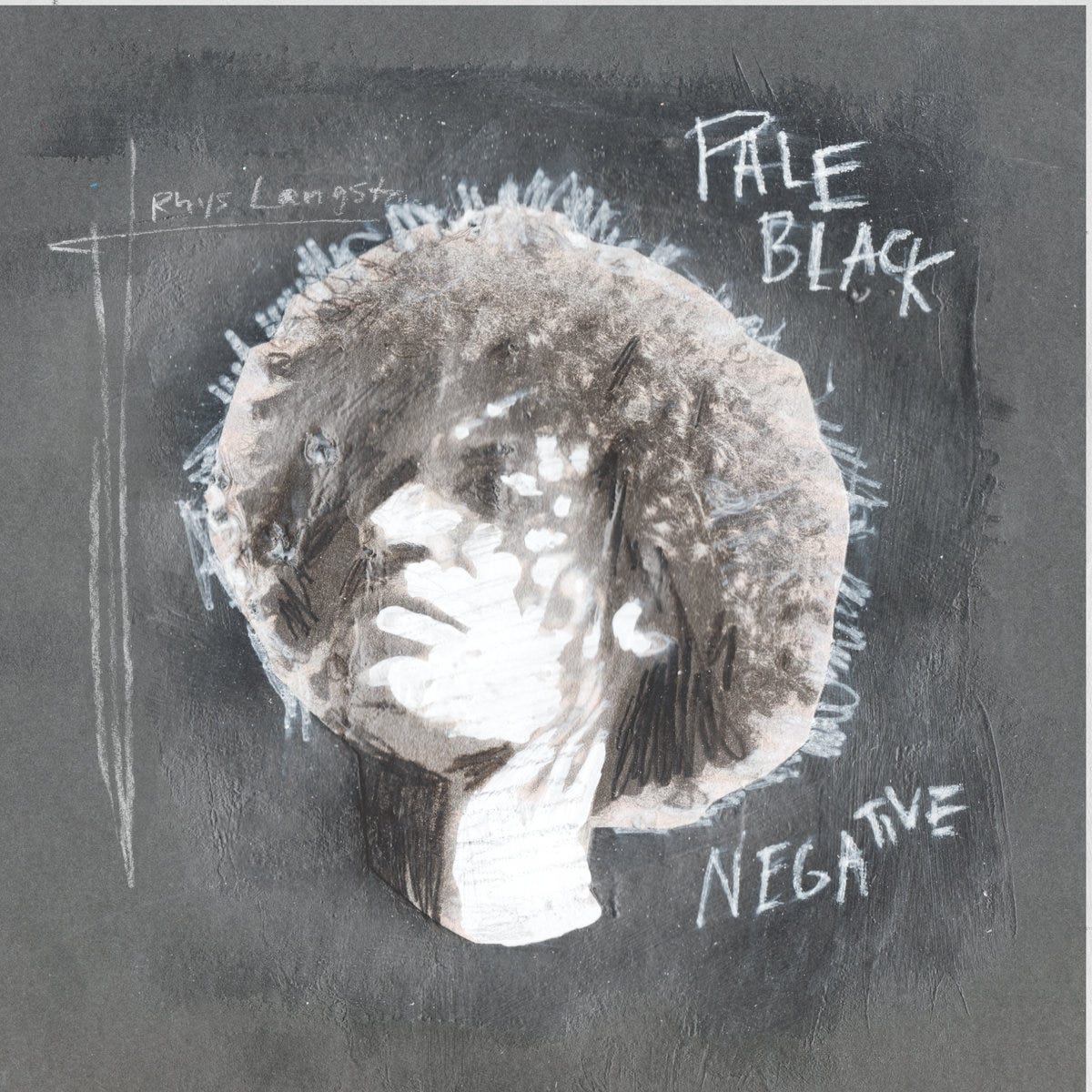
To say Los Angeles rapper and multi-instrumentalist Rhys Langston is prolific feels like an understatement. Pale Black Negative is his 20th release in a 10-year career. In that decade span, Rhys Langston has prioritized artistic growth; regression and stasis simply don’t comply with his operating systems. In the case of PBN, Langston eases up on the verbosity of past works for an emphasis on instrumentation and movement. Despite a few guest players adding guitar, violin and trombone, the entire album is written and performed by Langston on banjo, guitar, bass, clarinet, synths, and percussion. The result is unexpectedly effervescent given that his music is, and has always been, acutely attuned to the deteriorating and dangerous political environment.
Recently tapped to report on the ICE raids in Los Angeles, the album title elicits expectations of radical, confrontational, and existential music. Pair the title with the fact that Langston was raised in Leimert Park, a LA neighborhood with a deep history of radical Black activism and home of Project Blowed, and graduated from Wesleyan University, where he once wrote a 104 page book on rap as theory and praxis, and the expectations intensify for a longform trek through perils and tragedy. But naw… Langston subverts all that with grace. From the outset of “Legal Tender (Sanction What Is Soft)” Langston’s vocals drift atop acoustic strumming with the refrain “tell me you’re what’s caused me to realize.” It’s a hip-hop love song that will draw “You Got Me” comparisons for its drum-n-bass outro, but whether intended or not, the homage doesn’t detract.
I should clarify: Langston offers no compromise in the poetics. He does however adapt his wordplay to song structures that shift and evolve. His challenges himself to adapt to dance rhythms throughout Pale Black Negative, subverting the strictures of genre. On “It Jes Grew (Right Out Of Me)” he fires off “semicolon semaphore / flyaway, roots nest / I am the keeper of my brother’s DNA test / I am proxy for follicles meting out hypodescent” then, strips the banjo beat down to handclaps, shakers and metronomic tones for a sung chorus celebrating his unruly curls. This is clear some space out, so we can space out2 music, like Shabazz Palaces’ Black Up. He imbues PBN with African rhythms that seem to conjure courage and unbridled joy to his spirit. By the time we get to “To Write It Out Is,” we’re on a vista that feels impenetrable. There’s simply no harming Rhys Langston on Pale Black Negative, and if you need some of that for your spirit, then put this into your headphones.
Pale Black Negative is available on vinyl through Fused Arrow Records.
Asterisk’s No School LP
There’s funny story about Sonic Youth attempting to collaborate with Cypress Hill on the Judgement Night soundtrack3 in 1993 and it being universally understood that, at first, nobody knew where or how to begin, or as DJ Muggs put it in an oral history for Rolling Stone “no vibe in the studio, man.” That is until everybody got high, and while the session never reached the free-form noise wall that perhaps Thurston Moore envisioned, “I Love You Mary Jane” managed to lace a little guitar dust in its tightly-rolled composition. Thirty years ago, pairing hip-hop and experimental artists was a struggle to find footing past novelty.
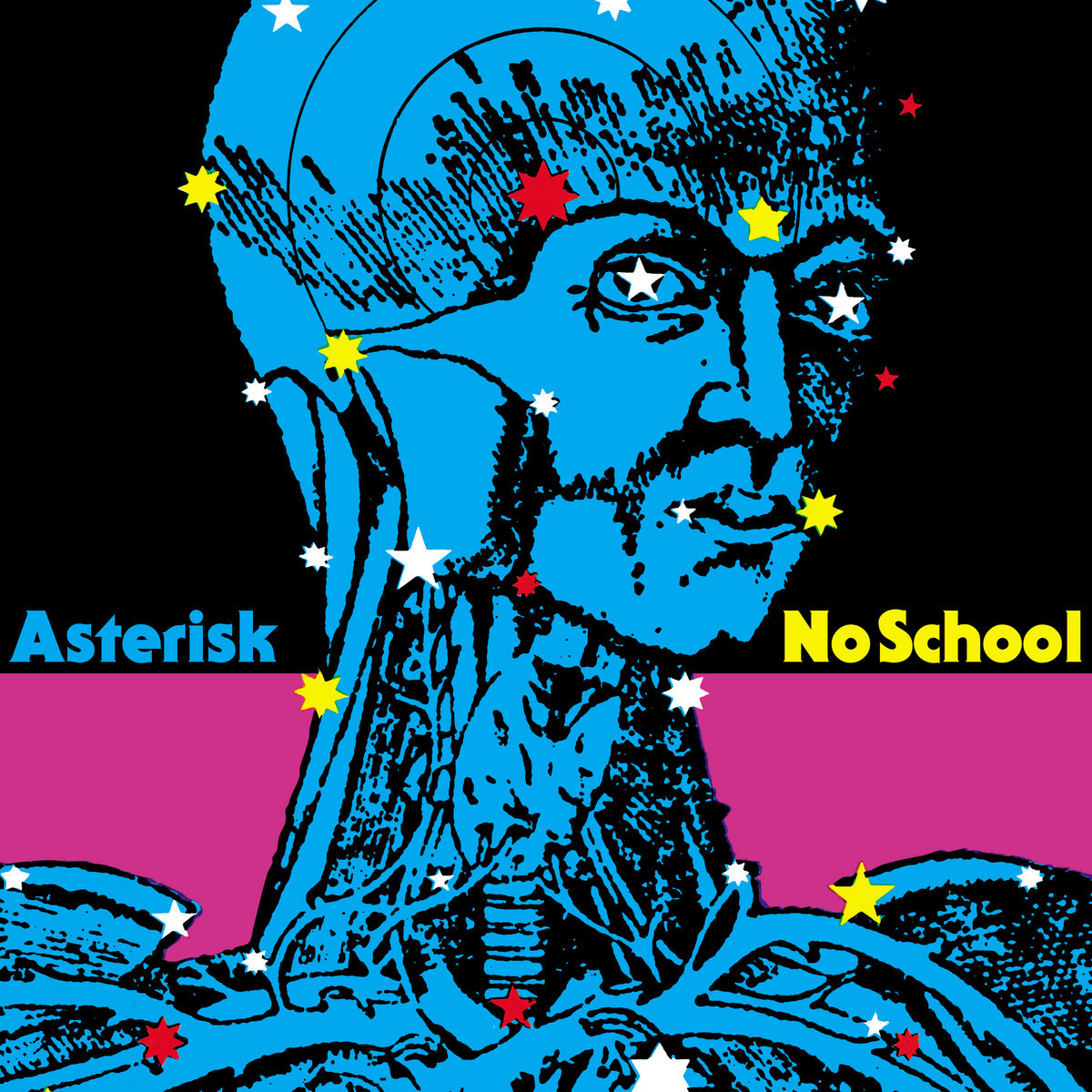
I say all this to say, Vermont folktronica and ambient producer Greg Davis made a record that illustrates how intrinsic the musical relationships are starting to become. Fittingly titled No School, Greg Davis’ album under his Asterisk alias finds the electronic producer intentionally seeking out rappers who are no strangers to experimentation. There’s those who’ve been unruly and inventive since the 90s like Myka 9, Nosaj of New Kingdom and Craig G4, those who’ve carried the torch for the last decade like Open Mike Eagle, and the current crop of inventors like Sleep Sinatra, Lungs, Video Dave, and Defcee.
Unlike Sonic Youth, Greg Davis was a head in the 90s making beats on his turntables, cheap sampler, and 4-track in his basement. But higher education moved his music towards jazz, improvisation, and avant-garde music which colored the next twenty years of his creative life making records for labels like Kranky, Carpark, and NNA Tapes. Asterisk is Davis back in the basement mentality. That 90s flavor seeps out in the production of “Stigma” (featuring Defcee) which feels like it’s channeling Q-Tip in Davis’ ability to make sampled jazz drums feel organic, while elsewhere Davis is deep in his cosmic jazz funk bag of Fender Rhodes chords over boom bap drums. For those who lived the mid-90s through Organized Konfusion, Boot Camp Clique and Fondle’Em Records 12-inches, parts of No School will trigger nostalgia, but the album isn’t longing for the past. Asterisk seems to conjure sonic spaces where an inventive rapper can feel at home and stretch out. No School has a strong sense for mood and structure, where the parameters feel elastic. They expand and contract, which is conducive to rappers with transmutable styles that challenge the edges. Welcome back to the basement, Greg.
Quadry’s A Magnolia: A Complete Series
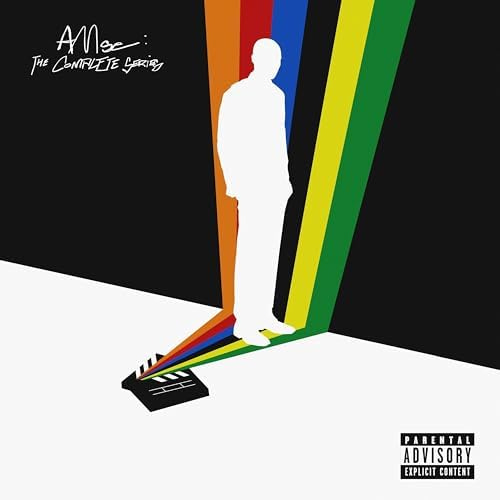
There’s an irony to Baton Rouge, Louisana rapper Quadry rapping “every record write myself a new existence”5 on the 2021 album They Think We Ghetto and it resulting in being dropped from his label and management. As if the Powers That Be responded, cool, do you anew… just not here. While working on that record, Dahi, the LA producer behind Kendrick’s “Money Trees”, told Quadry that he makes folk music, and the artist took that to heart, “That’s exactly what I do: folk music, stories about real folks. People with real lives.” Yet another industry antithetical. His independently-released 2024 record Ask A Magnolia attempted to document nearly a decade of his life into ten songs. Always boiling over (Magnolia contained two bonus songs), Quadry threw more ingredients into the pot this month by releasing a companion piece in A Magnolia: The Complete Series.
Seemingly picking up where bonus cut “The Waterboy” left off (I mean we all had dreams / nobody start bad), Quadry recasts Norman Rockwell portraits through a southern Black American lens. On “episode 1 ‘Tha Intro’,” he recalls halcyon days of lining up with his teammates on game day for the coach to tie each young boys necktie and how quickly his teammates evolved into a crew, “from Pokemon cards to buying bullets and condoms.” It’s as though Ask A Magnolia was putting together puzzle pieces and Quadry, with a near complete portrait, realized there were more pieces hidden in the box. The memory work goes even deeper on A Magnolia: The Complete Series.
Clocking in at a mere 15 minutes, the rich details of the nine-song companion piece are not cutting room extras or superfluous footnotes to Ask a Magnolia. It’s more like the short-film version6, a leaner study on how Quadry’s Baton Rouge upbringing in the since-demolished projects—in a country that erases and hides its sinful history—continues to influence his self-worth and identity. If Kendrick’s good kid, m.A.A.d city and Open Mike Eagle’s Brick Body Kids Still Daydream7 were two poles in the Black American folk canon of surviving the projects, Quadry’s Magnolia series resides in the in-between as the southern perspective. Unlike those two records, the community and its daily affirmations of resilience play a bigger narrative role in his folk tales. The aspect Quadry doesn’t want the listener to forget, and this is shared with Brick Body, is there’s an inflicted cost that repeats itself, when your sense of origin—as formerly enslaved people—is erased, figuratively and in the literal tearing down of housing, over and over again. Try as our violent-by-design systems might, the folklore Quadry brings to the Magnolia series is an essential tool in the resistance to erasure.
Set free, Quadry is making music that does not compromise his perspective or authenticity, and is ambitious in scope. What type of creative industry considers that grounds for dismissal?
This is a free newsletter. Those who wish to support can contribute here:
Venmo: busy-gillespie
Add me and IG.
Also, through little fault of my own.
Confession: I’ve heard this soundtrack. An IG account recently posted the “Fallin’” video by De La Soul and Teenage Fan Club, which remains one of my favorite De La songs. In the comments someone told the Cypress Hill meets Sonic Youth story and I had to confirm its legitimacy. I do want to give props to Judgement Night soundtrack executive producer Happy Walters for pairing Del The Funkee Homosapien with Dinosaur Jr. I see what you did there, and to quote Jurassic Park... clever girl.
“Weststruck” was my realization that Craig G and Brian Ennals sound a lot alike, which should be a compliment to both rappers.
To get the full picture of Quadry, read Yoh Phillips’ profile I Asked A Magnolia from April 2025 in Passion of the Weiss.
not to be confused with Quadry’s actual short film embedded above.
Another record born from memory work of growing up in the now-demolished project housing, in his case the Robert Taylor Homes in Chicago, IL.